

For most MRI exams, wear comfortable clothes with no metal and expect to change into a gown. The imaging facility makes the final call. You may be asked to change even if your outfit has no obvious zipper or buttons, so the best guide to what to wear to an MRI is the instructions for your own appointment.
If your scan was ordered as part of a spine evaluation, Long Island Spine Specialists' physician can help you find the doctors involved in your care. Questions about clothing and scanner safety go to the imaging facility.
Plan an easy change, not a perfect outfit

Choose clothes that are comfortable to arrive in and manageable to remove and put back on. According to RadiologyInfo.org, the patient information site run by the Radiological Society of North America and the American College of Radiology, you will typically be given a special gown for the exam. There is no need to buy a special outfit on the assumption that you will be allowed to wear it.
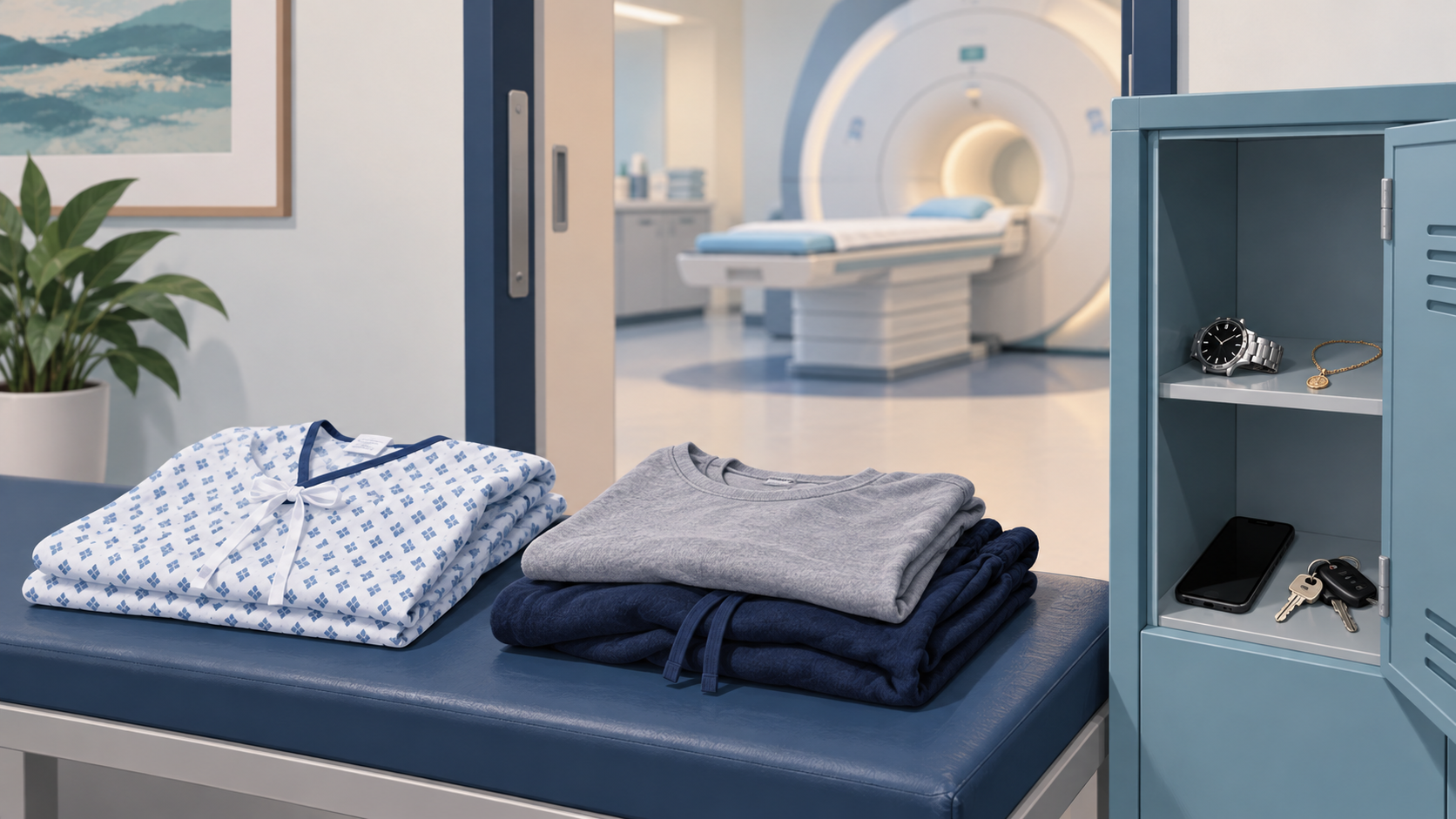
Think through your own practical needs. Are some fastenings hard for you to manage? Would you need a place to sit while changing? Do you use an aid that staff should know about? Raise these before you arrive, and ask what help or changing arrangements the facility offers.
**Clothes can have metal you can’t see**
An MRI scanner uses a powerful magnet, so anything metal needs careful handling. RadiologyInfo explains that some clothing contains metallic threads or metal-based antibacterial compounds that you can’t see. It names athletic wear such as yoga pants, as well as socks and some braces, as examples that can heat up during a scan and cause burns, which is why facilities often ask patients to remove such items.
The takeaway is to ask, not to guess. A garment that looks ordinary may not be suitable, and a friend who was allowed to wear a certain shirt tells you nothing about your own exam. Let the facility’s staff decide what stays on, what comes off and what needs a second look.
What you may be asked to remove
Facilities vary, but there is a list of items patients are commonly asked to take off or leave outside the scan room:
- Clothing with metal zippers, buttons, snaps, hooks or underwire
- Jewelry, watches and body piercings
- Phones, keys, coins, wallets and cards with magnetic strips
- Hairpins, clips and barrettes
- Belt buckles, safety pins and shoes
- Medical devices, implants or other items the screening form asks about.
It also notes that some makeup, nail polish and a few tattoos can cause problems. If you have questions about any of these, call before the day of your scan.
If you have implants or other devices
At check-in, you will usually fill out a screening form that asks about implants and devices. Answer it as completely as you can, and tell the staff about anything you’re unsure of.
Some of this matters especially for spine patients. RadiologyInfo says metal hardware such as a spinal rod, or plates, pins and screws used to repair a bone or joint, can affect image quality when it is close to the area being scanned. It also lists implanted medication pumps, including those used to deliver pain-relieving drugs, and nerve stimulation devices among the items to report. Some of these devices can be scanned, but the team needs the exact name and manufacturer, so bring any device card or paperwork you’ve been given.
You don’t need to work out whether a device is safe for MRI yourself. Give the staff the details they ask for and let them evaluate your situation.
If you can’t remove something easily, call ahead rather than waiting until you’re positioned for the scan. Explain the problem plainly, and ask what the facility needs from you beforehand.
Keep visit questions and safety questions separate
A bag for your belongings solves an organizational problem. It does not decide what can enter the scan room. It helps to keep two short lists when you call:
- About the visit: arrival time, changing arrangements, where to leave your things
- About screening: devices, implants and anything else on the form
That makes it easier to reach the right person. A short script can help: “I’m scheduled for this exam on this date. I understand I may need to change. Is there anything about my clothing, belongings or screening that I should deal with beforehand?”
Confirm the details for your scan
An MRI appointment can involve instructions beyond clothing. Do not assume that an instruction for a previous scan applies this time. Ask the facility to confirm the preparation for your exam, including anything about food or medicines, and write the answers down next to the facility’s name and your appointment date. If what you hear seems to conflict with something your doctor said, ask both teams to clarify before the visit, and pass along their exact words.
What happens after the scan
Clothing is one small part of preparing for the visit. Before the appointment, know who ordered the scan and whom to contact about the next discussion. Ask how the imaging information will reach that doctor and whether you need to arrange a follow-up separately.
If you have questions about the part of your care that the practice handles, call Long Island Spine Specialists at (631) 837-2359 to find out who can help, and confirm clothing, screening and arrival instructions directly with the imaging facility on your appointment paperwork. For spine patients on Long Island, the most reliable preparation is simple: follow your facility’s instructions, tell the staff about anything you’re unsure of, and know whom to contact afterward.