

A pain scale is a simple way to rate how intense your pain feels, usually with a number, a set of words or a row of faces. The number you choose tells your doctor how intense the pain feels to you at that moment or over a particular period. It does not, by itself, explain the cause, the location or how it affects your day. Think of it as the start of a conversation about your back or neck, not the whole story.
When you meet with Long Island Spine Specialists' interventional pain management team, you will likely be asked to rate your pain at some point. Then add context in your own words. You do not need to select a dramatic number to justify asking questions or describing a limitation. Use the scale you are given, ask what the lowest and highest numbers mean, and add your own explanation.
Know which pain scale you are being asked to use

Pain scales come in a few common forms. One is a line of numbers, often 0 to 10, where 0 means no pain and 10 means the worst pain you can imagine. Others use words such as mild or severe, or a row of faces. The exact wording varies from one office to another, so follow the explanation your care team gives you rather than assuming every scale works the same way.
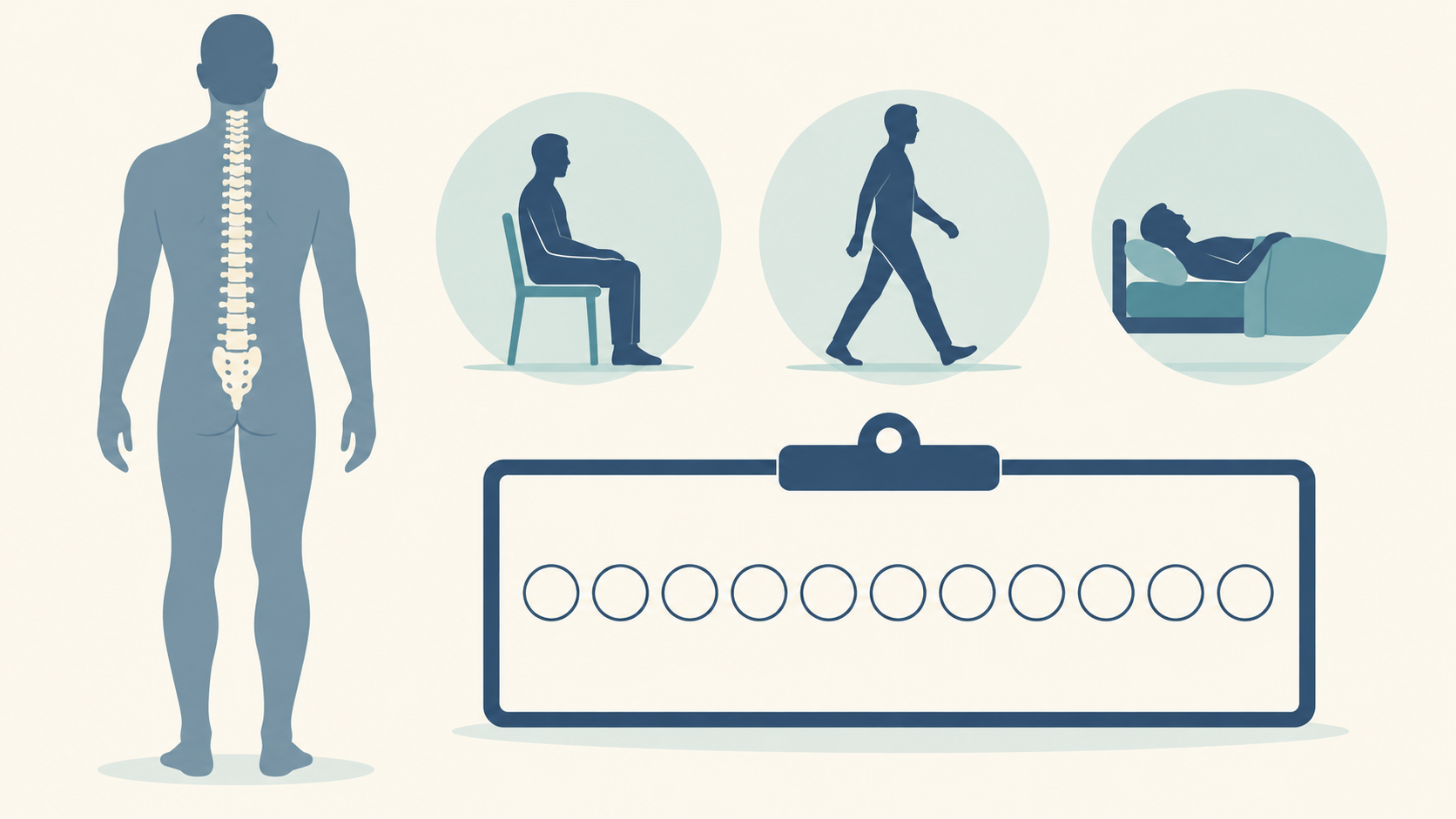
If you are not sure where your experience fits, say so and describe the uncertainty. A short comment like “this feels between two of the numbers” gives your doctor more to work with than a guess.
Ask what time frame the number covers
Your doctor might be asking about right now, the worst point since your last visit, or an average over a set period. These are different questions. Someone sitting calmly in the exam room may have had a very different morning.
It is fine to ask, “Right now feels different from yesterday evening. Which should I rate?” That keeps two separate experiences from being squeezed into one number, and it gives your doctor an opening to ask what changed.
What a number on a pain scale can’t show?
Two people can give the same number and describe very different days. One might have continued normal activities more slowly. Another might have changed plans to avoid an activity altogether.
The Veterans Health Library's guidance on communicating about pain encourages people to explain effects on sleep, mood, stress and daily function alongside a rating. That is a useful reminder: your number should have a description beside it. The scale does not replace the rest of the conversation.
For example, you could say, “That is my number while I am sitting here. This morning I stopped getting ready twice because of how my back felt.” This is an invented example of wording, not a suggested score or a test to perform. Use something that really happened in your own routine.
Describe where you feel it and what has changed
A number says nothing about location. If you can, tell your doctor where you feel the pain, such as your lower back, your neck, or an arm or leg, and whether it stays in one place or seems to travel. You do not need medical terms. “It sits low on the right side and sometimes reaches my leg” is the kind of plain description that helps.
Then pick a few ordinary activities that matter to you and explain what is different:
- Daily tasks: what you still do, what takes longer and what you have stopped doing.
- Work or home responsibilities: one specific task affected and how you changed it.
- Sleep: what you have noticed and how it interrupts your night.
- Variation: whether this moment is typical, better or worse than other times you are discussing.
- Questions: what you want the doctor to understand that the number leaves out.
Specific beats general. “Getting dressed” tells your doctor more than “being active,” because you can explain which part has become difficult.
Keep your notes consistent
If you choose to record scores between appointments, ask your clinician whether that would help and what they would like you to write down. More entries are not automatically better. A short note with a clear time and date can be easier to discuss than a long sequence of unexplained numbers.
If you are comparing an older rating with a new one, bring your original notes and explain how you used the scale at the time. If your own interpretation has changed, say so. A record should reflect what you meant when you wrote it.
Avoid using a score to diagnose yourself
A pain rating does not identify which structure is involved or tell you which treatment is appropriate. Do not use an online chart to convert your number into a diagnosis. Similarly, a lower number also does not answer every question you may have about a change in how you feel or function.
If something you read online does not match your experience, bring that to your appointment instead of adjusting your answer to fit it. You can say, “I do not know whether this word describes it, but this is what I notice.” Plain language is more useful to your doctor than a term chosen to match a website.
Before you go to an appointment
Before your visit, jot down the one daily concern you most want to discuss. Bring any notes or worksheets you were asked to complete, and ask your care team to explain anything you do not understand, including what the next step means and how to report changes between visits.
If you are on Long Island and want to talk with a spine specialist, contact Long Island Spine Specialists to confirm appointment details. The most useful thing you can bring is a rating together with a clear description of where you are today and what has changed in your daily life.