

If you have back pain that runs down into one leg and someone at an appointment used the words lumbar radiculopathy, this article is for you. The term sounds heavier than it is. Lumbar radiculopathy is nerve pain that starts at a nerve root in the lower back and travels down the leg, often past the knee. Lumbar means the lower back. Radiculopathy means a nerve root is irritated or under pressure.
I wrote this to explain the words and to describe what usually happens at a spine appointment. It is not a way to work out what is going on in your own back, and it is not a treatment plan. Those are conversations for a clinician who can take your history and examine you.
The quick version. Lumbar radiculopathy means a nerve root in your lower back is irritated or compressed, and the pain shows up in the leg rather than only in the back. Where the pain travels helps a clinician narrow down which nerve root is involved. An assessment normally starts with a history and a physical exam, and imaging comes in when the exam raises a question it cannot answer.
What lumbar radiculopathy actually means
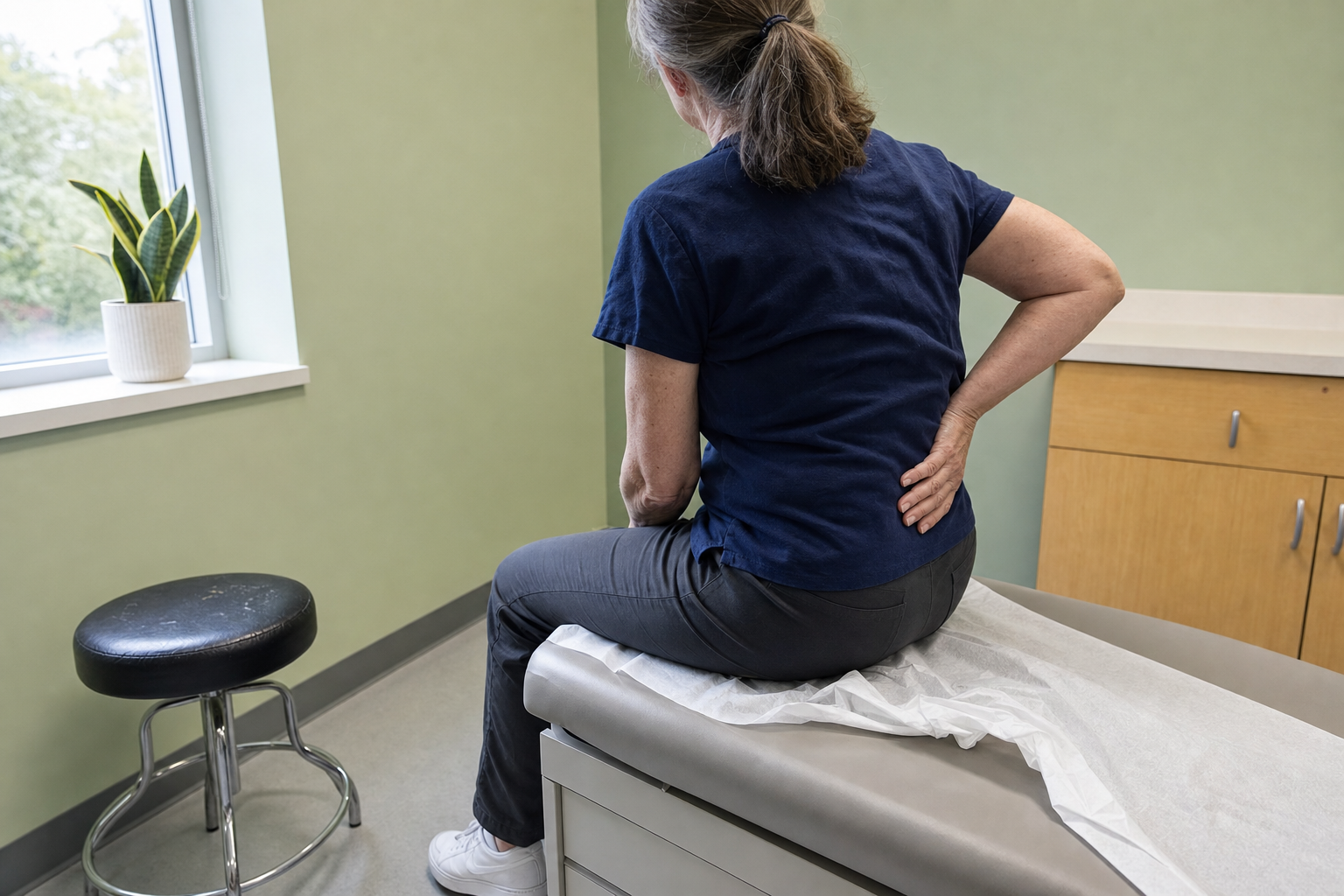
Your lower back has five lumbar vertebrae stacked on top of the sacrum. Between them, pairs of nerve roots leave the spinal canal and run down into the hips, legs and feet. Each nerve root carries signals for a particular strip of skin and a particular set of muscles.
Radiculopathy is what clinicians call it when one of those nerve roots stops working normally because something is pressing on it or irritating it. A disc that has bulged or herniated is a common reason. Bone spurs, a narrowed opening where the nerve exits, or swelling around the nerve can do the same thing. The nerve root is the part that has the problem, and the leg is where you feel it.
People often use the word sciatica for the same experience. Sciatica describes pain along the path of the sciatic nerve. Radiculopathy describes the nerve root at the top of that path. They overlap, and you will hear both.
Why the pain shows up in your leg and not your back
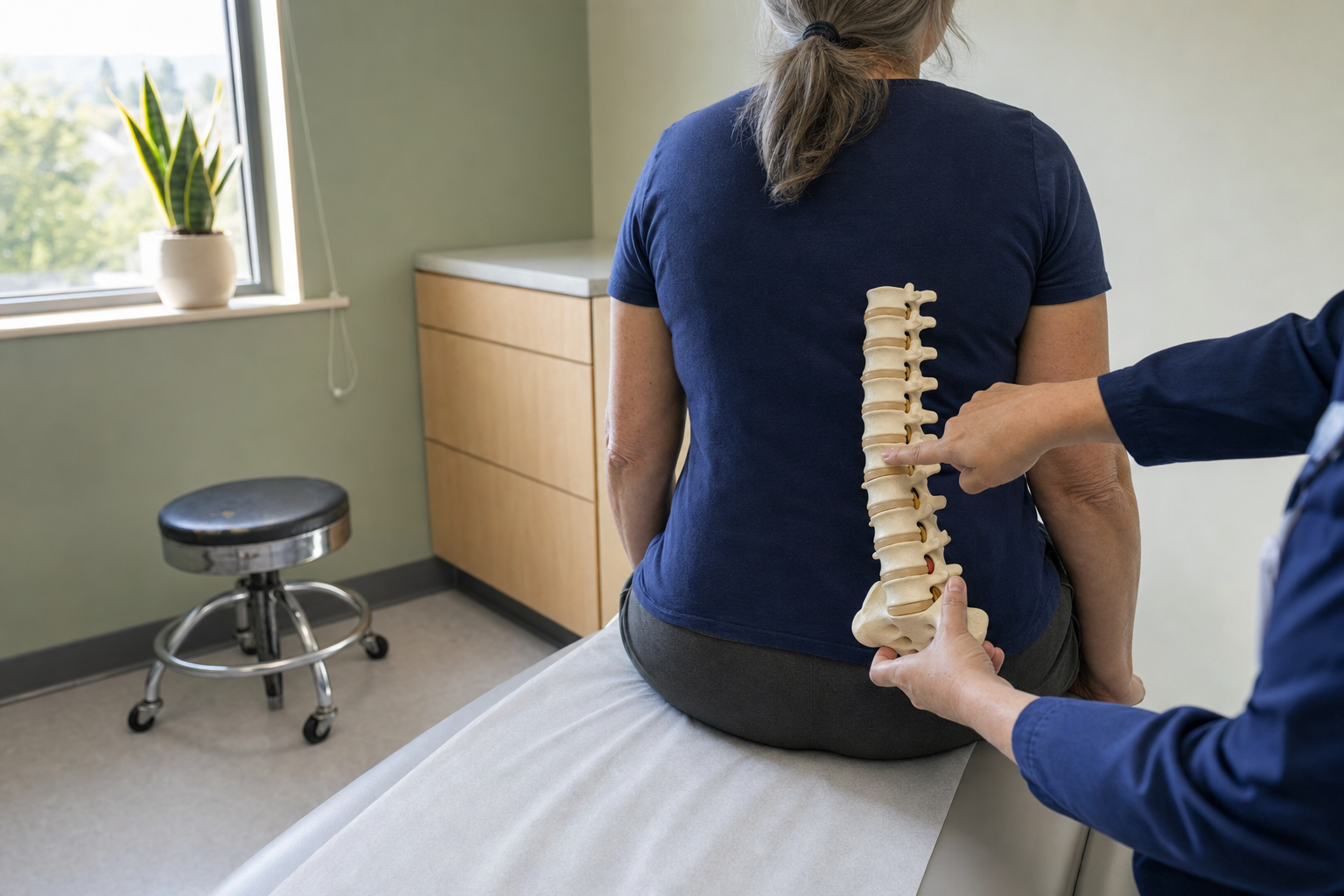
This is the part that confuses people most. The problem sits in the lower back, but the loudest symptom is often below the knee. That happens because a nerve reports pain from everywhere it travels, not from the spot where it is being squeezed. Press on a nerve root at the waist and the signal can land in the calf or the foot.
It also explains why some people with nerve root irritation have very little back pain at all. Their back feels stiff or slightly sore and the leg is the real complaint. Others have both. Neither version is unusual, and neither one tells you how serious the situation is.
Along with pain, nerve root irritation can bring pins and needles, numbness in a patch of skin, or weakness in a specific movement such as lifting the foot. Those symptoms matter to a clinician because they point at a nerve rather than a muscle.
What the pattern of the pain tells a clinician
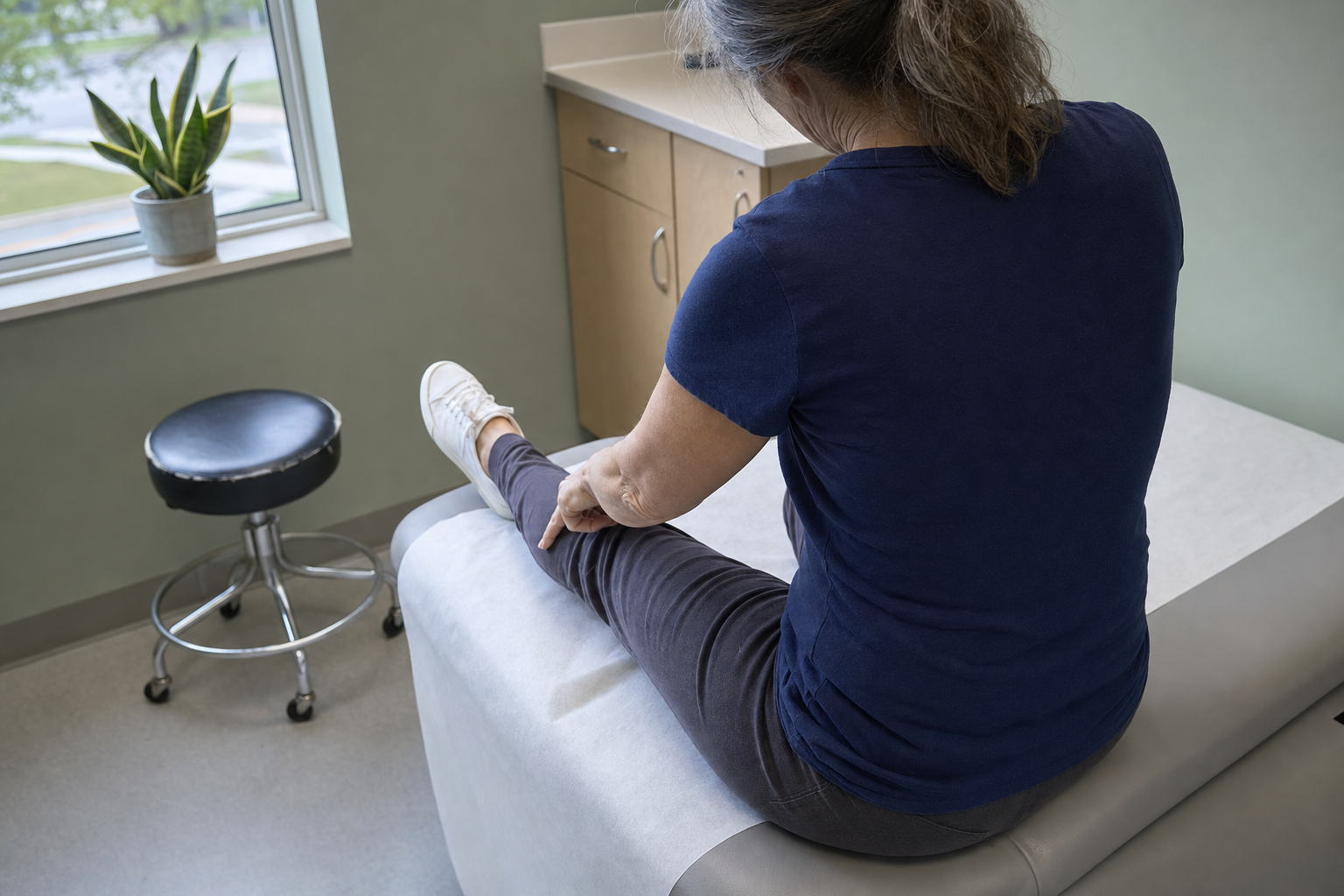
One of the first things a spine clinician asks is where the pain travels and where it stops. The route it takes is a clue about which nerve root is involved, because each root serves a fairly predictable area. The table below shows the general map that clinicians work from in the lower back.
| Nerve root | Area it usually serves | What a clinician tends to check |
|---|---|---|
| L4 | Front of the thigh and across the knee toward the inner lower leg | The knee reflex and the strength of straightening the knee |
| L5 | Outer calf and the top of the foot, sometimes into the big toe | Strength lifting the foot and the big toe upward |
| S1 | Back of the thigh and calf, into the heel and the outer edge of the foot | The ankle reflex and calf strength |
Real people overlap the map all the time. Two nerve roots can be involved at once, pain can spread wider than the chart suggests, and some patterns do not fit at all. That is why the pattern is treated as one piece of information rather than an answer on its own.
Other reasons leg pain happens
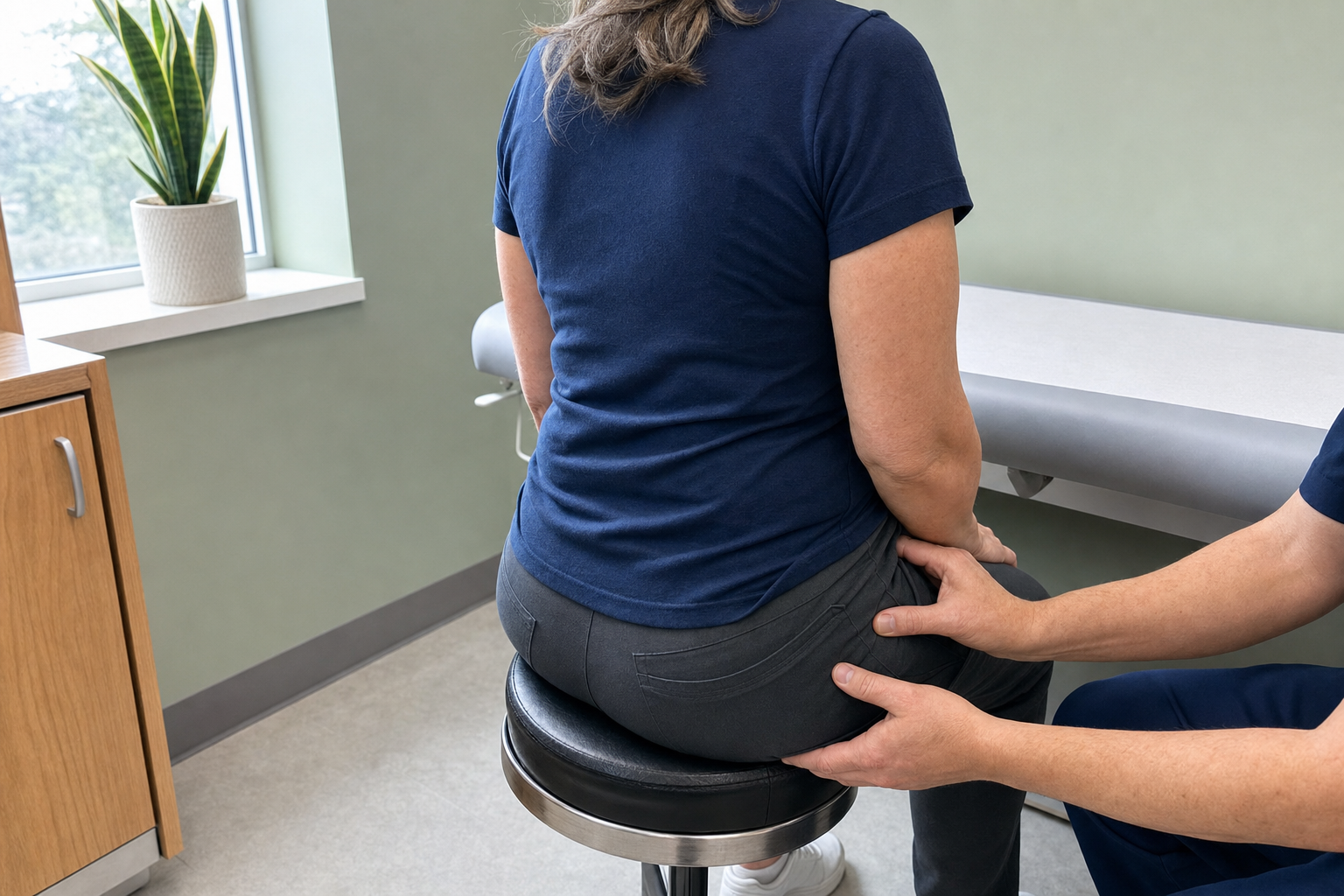
Nerve root irritation is one cause of leg pain. It is not the only one, and a spine clinician thinks about the others before settling on anything. Some of the more common possibilities are below.
- Hip joint problems, which often send pain into the groin and the front of the thigh
- Sacroiliac joint pain, which usually sits low and to one side of the pelvis
- A muscle strain in the lower back or the buttock
- Narrowing of the spinal canal, which can affect more than one nerve at a time
- Muscle tightness in the buttock that presses on the sciatic nerve
- Circulation problems in the leg, which are not a spine issue at all
Long Island Spine Specialists keeps a plain-language library of the spine conditions it treats, including piriformis syndrome, if you want to read about the alternatives before your appointment.
What an assessment usually involves
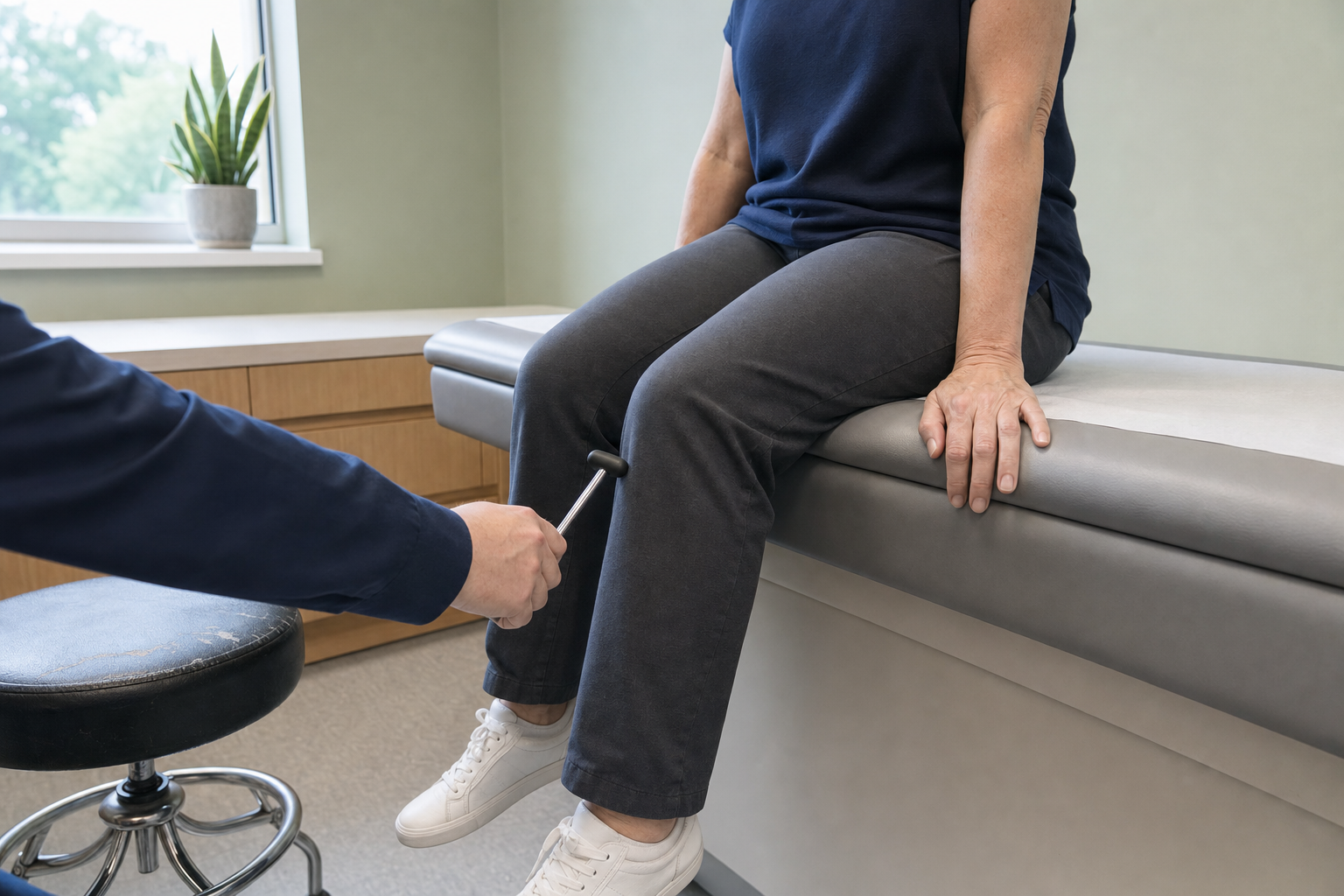
Most spine appointments follow the same order. The history comes first: when the pain started, what makes it better or worse, how far down the leg it goes, and whether anything has changed recently. Bring that information with you, because it does more work than people expect.
Then comes the physical exam. A clinician usually checks reflexes at the knee and ankle, tests the strength of a few specific movements, and touches different areas of the leg to see where sensation has changed. There are also movement tests that put a gentle stretch on the nerve to see whether it reproduces the pain. None of it is complicated, and it usually takes a few minutes.
Imaging comes after the exam rather than before it. An MRI shows discs, nerve roots and soft tissue, and an X-ray shows the bones and the alignment. Findings on a scan get read next to what the exam showed, because scans of people with no symptoms often show wear and tear too. Your clinician will explain what the images mean in your case.
The kinds of treatment that get discussed

I am not going to tell you what treatment to have, because that depends on your exam, your imaging and your history. What I can do is name the options that usually come up so the conversation is less of a surprise.
Conservative care is normally where the discussion starts. That covers physical therapy, activity changes and medication managed by your own physician. If symptoms carry on, spinal injections and nerve blocks are the next thing people tend to hear about, and those are handled by interventional pain physicians. Surgery enters the conversation for a smaller group, usually when the nerve compression is clear on imaging, matches the exam, and has not settled with the other approaches.
Long Island Spine Specialists is a spine-only practice, so both sides of that range sit under one roof. Their back pain relief section sets out how they think about the non-surgical and surgical options together. The practice also offers second opinions, which is worth knowing if you have already been told surgery is the only route.
Talking it through with a spine specialist on Long Island
If leg pain has been going on and you want someone to look at it properly, the practical question is which office to call. Long Island Spine Specialists runs offices across Long Island, so it usually comes down to what is closest to you.
If Commack is the nearer office, you can read about the spine specialist commack patients see there. If you are further east, you can read about the spine surgeon riverhead patients see at the Riverhead office. Either way, bring your imaging report, a note of what you have already tried, and a description of exactly where the pain travels.
One last thing. This article is general information about a term you may have heard, and it is not a substitute for an assessment by a clinician who can examine you and review your images. If your leg pain is not settling, book a consultation and have it looked at.
You can request an appointment through the contact form or call the practice on (631) 837-2359. Thanks for reading.