

If you are comparing a firm vs soft mattress because your back feels uncomfortable in bed, the useful question is how each mattress supports you while still feeling comfortable. The hardest bed is not automatically the best choice for your spine. A soft surface is not automatically unsuitable, either.
Firmness describes how much the surface gives. Support depends on the mattress beneath that surface and how it fits the person lying on it. Comparing both can help you make a more informed purchase. It cannot identify the cause of back pain or replace advice about an existing spine problem.
For Long Island readers, the guide below explains what to compare, what the research actually says and where mattress shopping ends and individual spine care begins.
Compare cushioning and support together
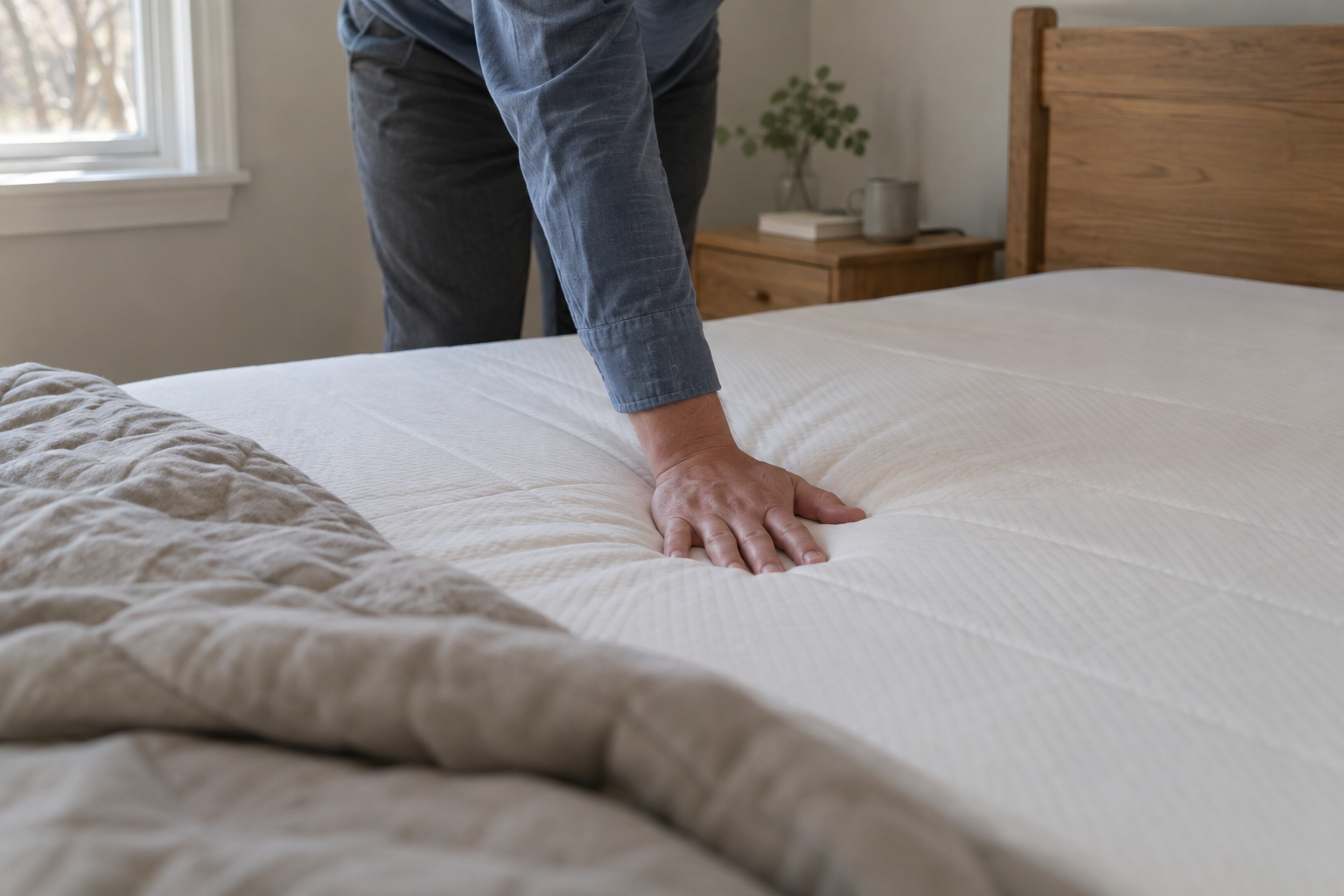
A softer mattress usually lets you sink farther into its upper layers. A firmer one offers more resistance. You may prefer one feel immediately, but that first impression does not describe every part of the mattress.
Saatva’s firmness guide distinguishes surface comfort from the support core beneath it. Foam or springs can form that core. A cushioned top and a supporting structure can therefore exist in the same bed.
When spine support is your concern, compare how the whole bed feels beneath your body instead of judging it by pressing one hand into the surface. A hand tests a small area. Lying down lets you notice the bed across your shoulders, lower back and hips. Those observations describe your experience; they do not establish a medical finding about spinal alignment.
| Comparison | Useful observation | Avoid assuming |
|---|---|---|
| Softer surface | How deeply you settle into it | Soft always means poor support |
| Firmer surface | How comfortable its resistance feels | Harder always means better for your back |
| Overall mattress | How the layers feel together | A firmness label identifies a treatment |
What research says about a firm mattress for back pain
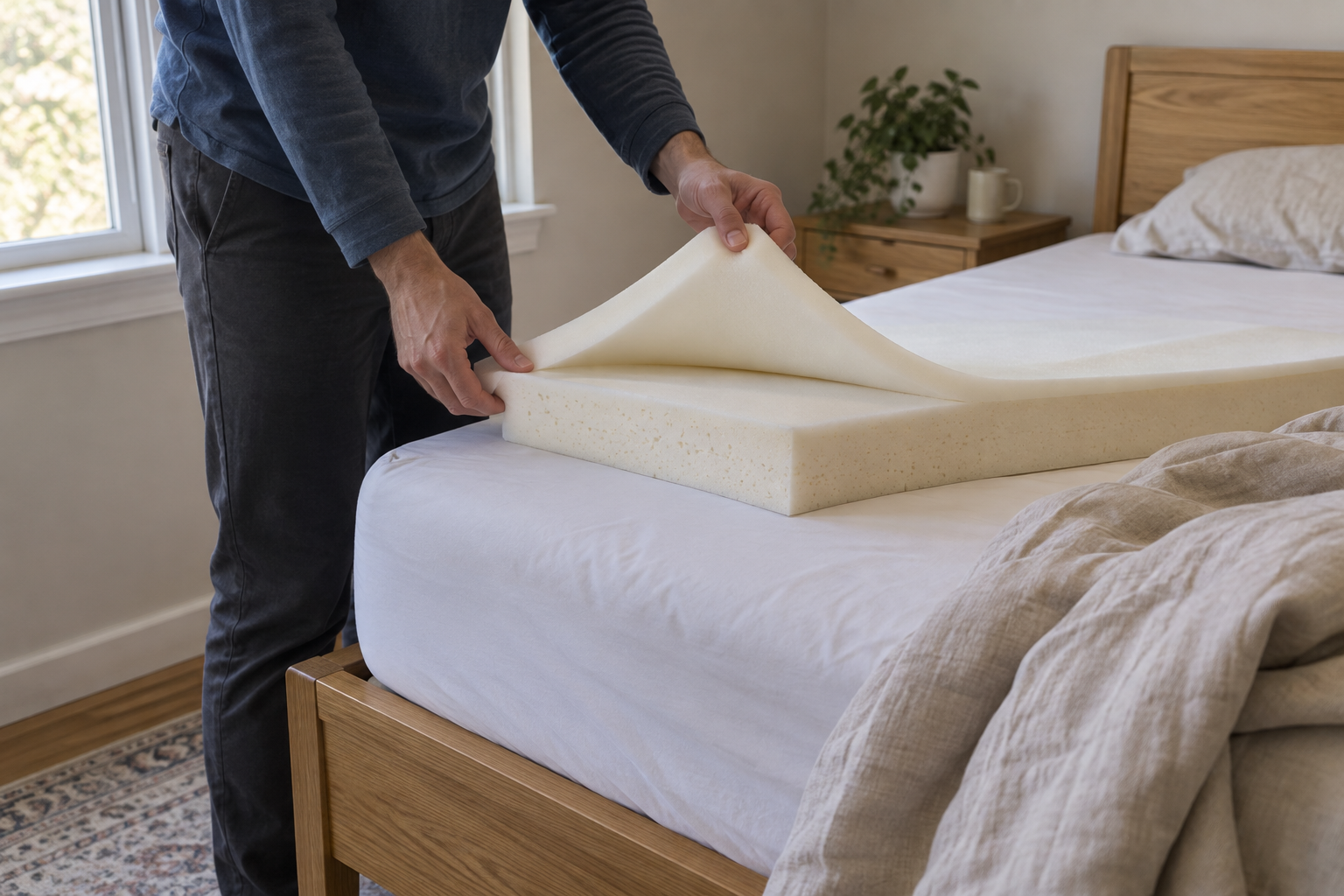
The idea that everyone with back pain needs a very firm mattress is too simple. A randomized trial published in The Lancet in 2003 compared firm and medium-firm mattresses in 313 adults with long-standing lower back pain. After 90 days, the medium-firm group had better results for pain in bed and pain-related limitations in daily activity.
The study involved people with non-specific lower back pain and without referred pain. It did not establish the right mattress for every spine condition, compare all current products or show that the softest mattress was best. Its firmness measurements also should not be treated as a direct match for every store’s rating scale. Long Island Spine Specialists’ back pain information provides broader context for symptoms and possible causes beyond bedding.
The practical lesson is to include comfort in the comparison rather than choosing the hardest option on principle. The evidence challenges a blanket rule; it does not give every reader the same shopping prescription.
Try the mattress in the position you normally use
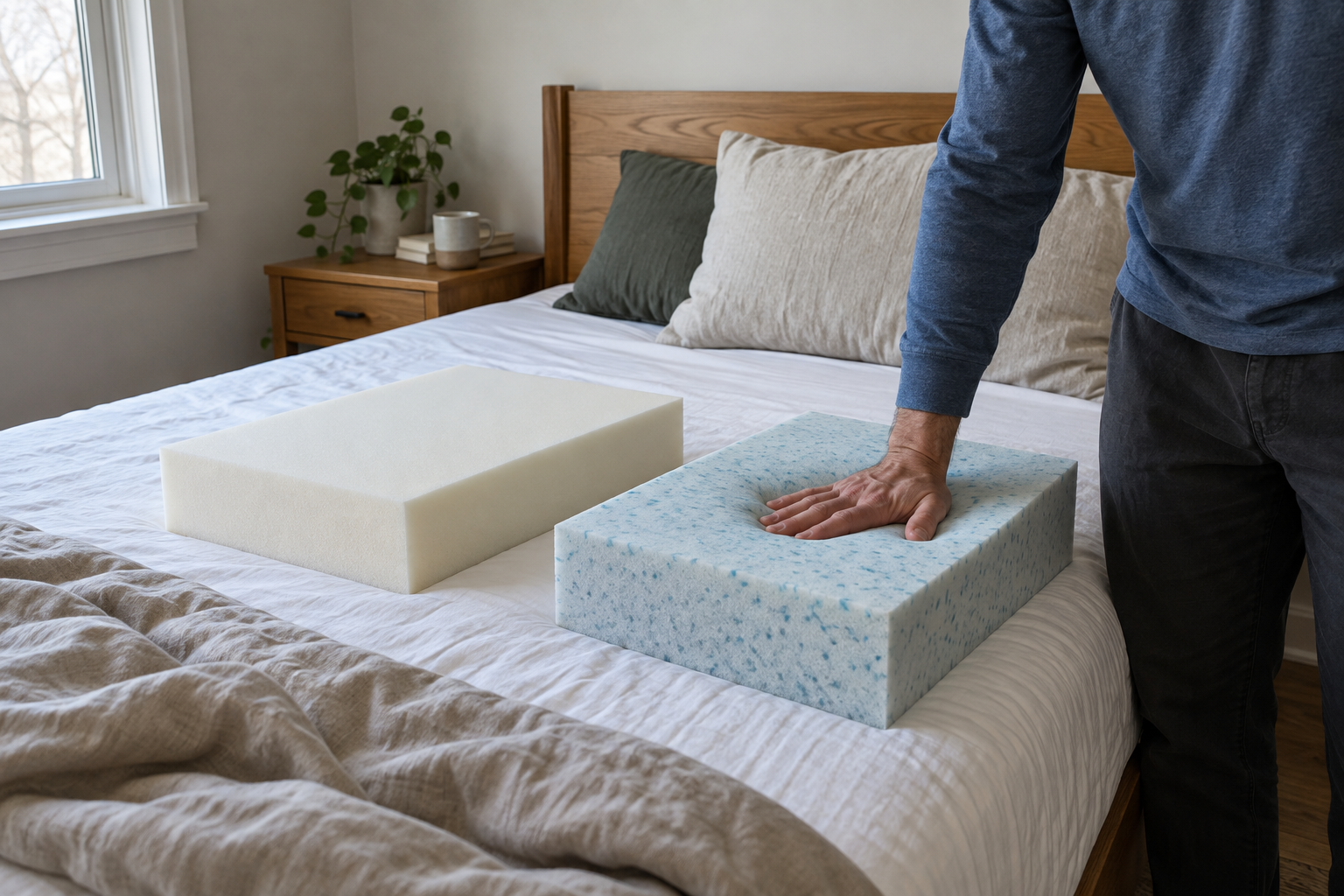
A brief sit on the edge tells you little about how the bed will feel while lying down. Harvard Health’s mattress guidance recommends trying mattresses in person and allowing time to compare how they feel. It also notes that personal preference and comfort matter.
Use your normal resting position when comparing models, provided it is comfortable and consistent with any instructions you already follow. Notice whether one surface feels uncomfortable at your shoulders or hips, whether you settle farther than you like and how easy ordinary position changes feel. There is no need to force an unfamiliar position to test a mattress.
Keep the comparison consistent. A thick topper on one display bed and no topper on another can make the experience different before you even consider the mattress itself. Your observations are more useful when you know which setup you tried.
Look beyond the material name
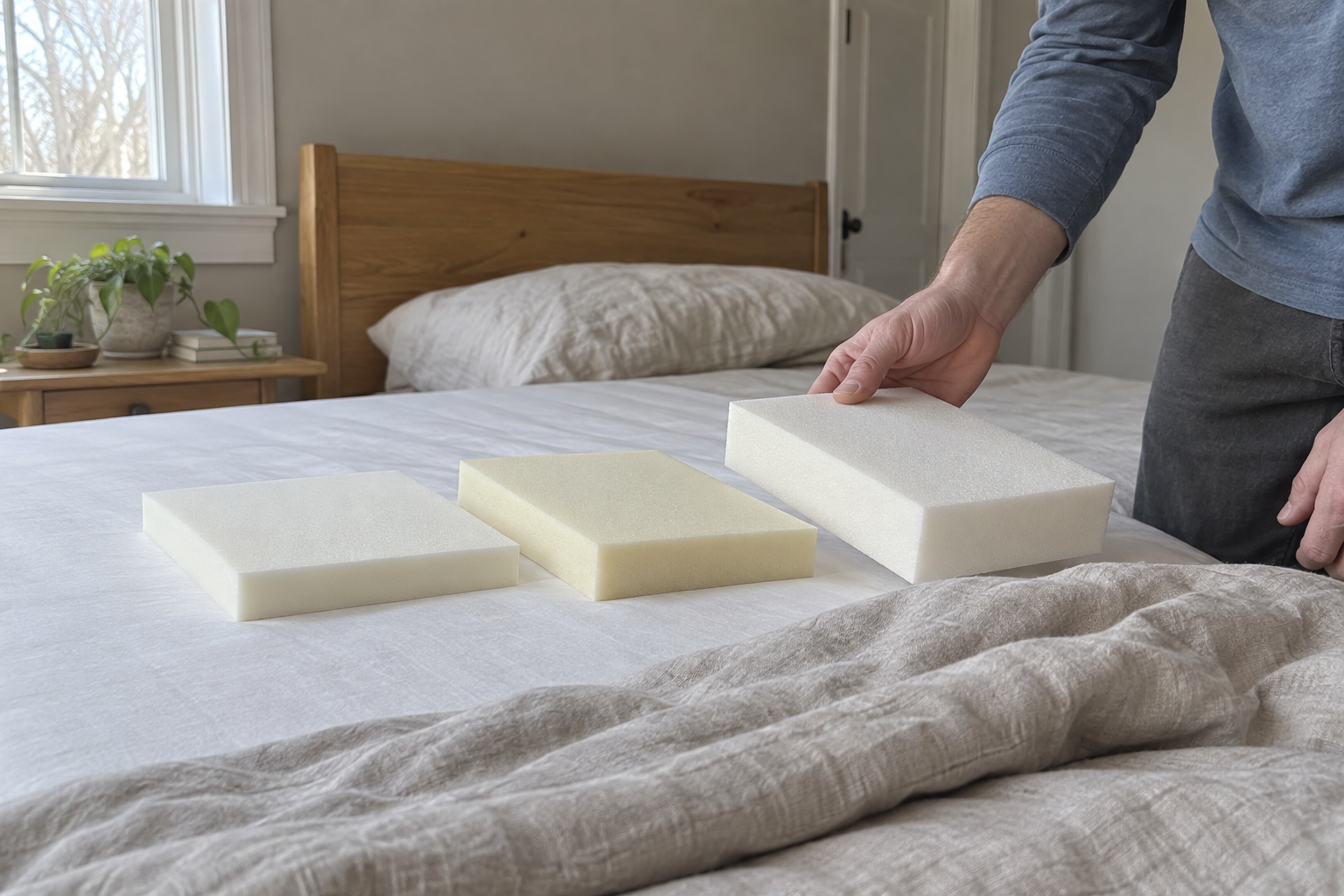
“Memory foam,” “hybrid” and “pillow top” describe aspects of construction. They do not identify one universal level of spine support. A person shopping because of back discomfort still needs to consider the actual model and its feel.
Tempur-Pedic’s material guide explains how its comfort layer contributes to a soft, medium or firm feel. Other layers have different roles. This is why the name of one material cannot explain the complete mattress.
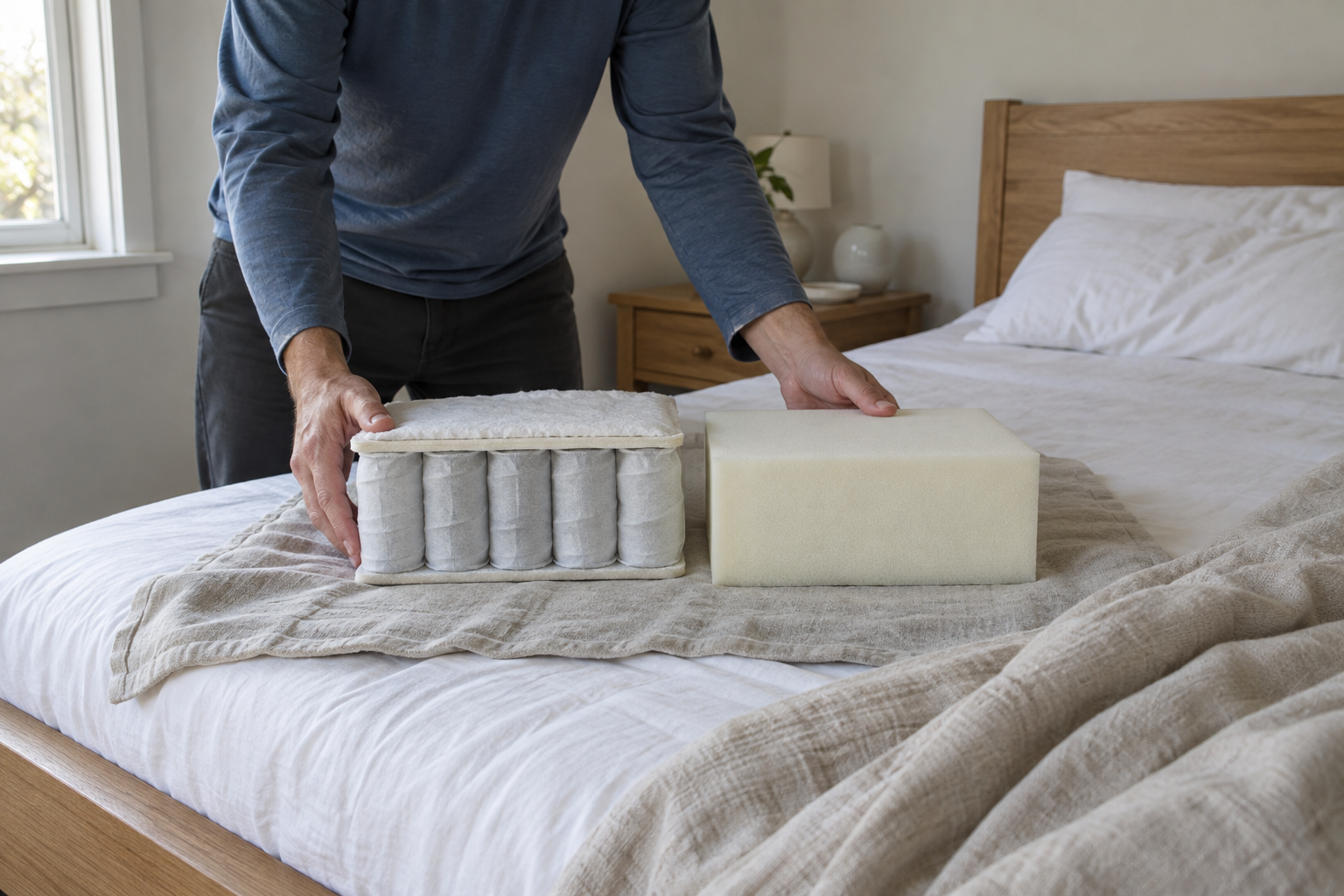
Compare models on the same basic points: surface cushioning, overall resistance and how they feel when you change position. Keep these observations separate from claims about pain relief. A product description cannot tell you whether a disc problem, arthritis or another cause explains your symptoms. Paying more for a material or choosing a firmer label does not answer that question either.
Check what a trial and a topper can actually tell you
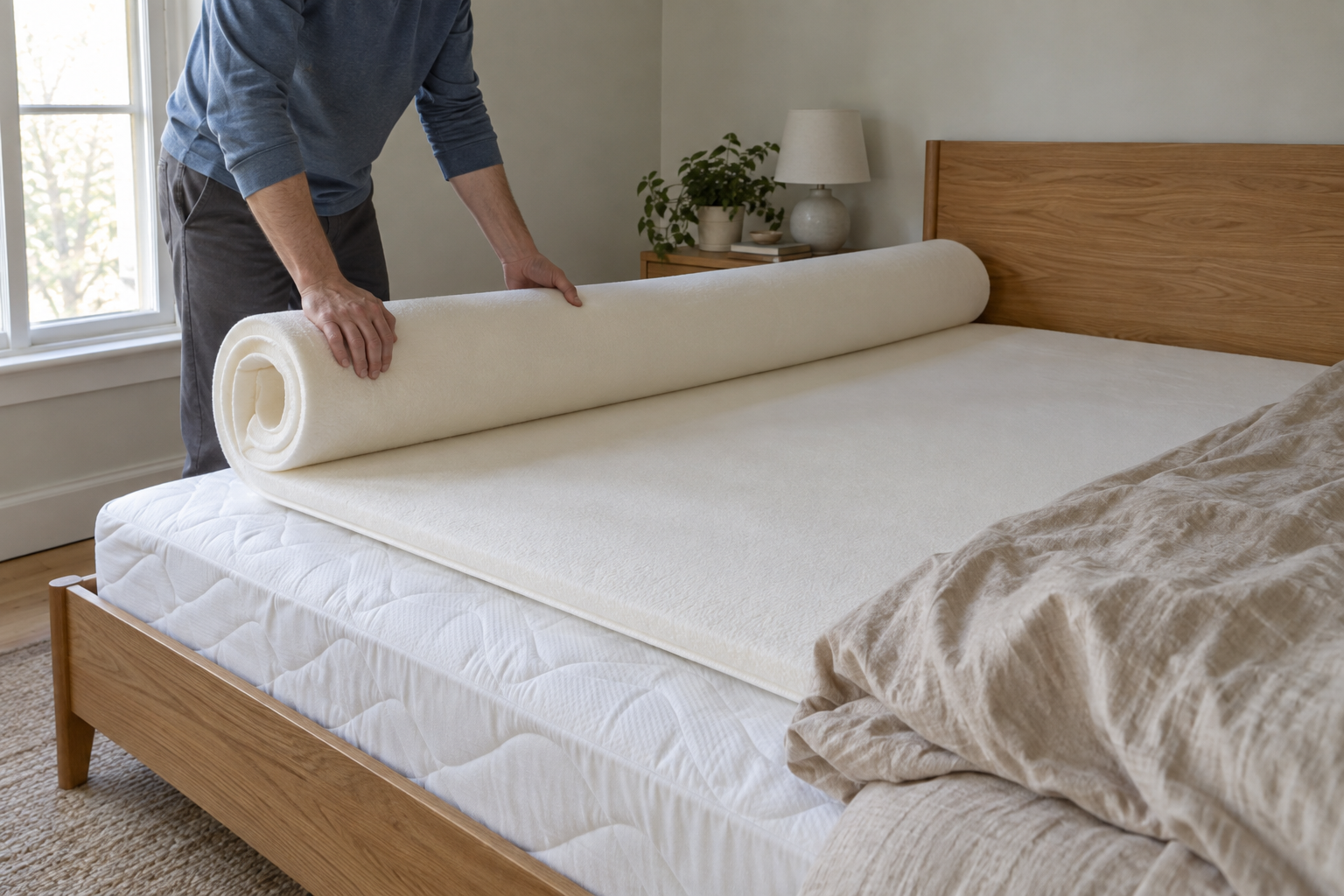
A showroom comparison is a short experience. Before purchasing, read the written home-trial and return terms for the particular mattress. Note any minimum trial period, collection charge or return conditions. This is a way to understand the purchase, not a promise that a trial will resolve back discomfort.
A topper adds another layer above the mattress. Tempur-Pedic describes its toppers as adding a more cushioned feel. That may change your impression of the surface, but it does not turn the underlying mattress into a different construction.
If you compare a topper with a new mattress, record which setup you used. Keep product comfort separate from changes in symptoms. A more comfortable night is useful to notice, but it does not prove what caused your back problem or establish that a mattress is treating it.
Keep an existing spine problem in the decision
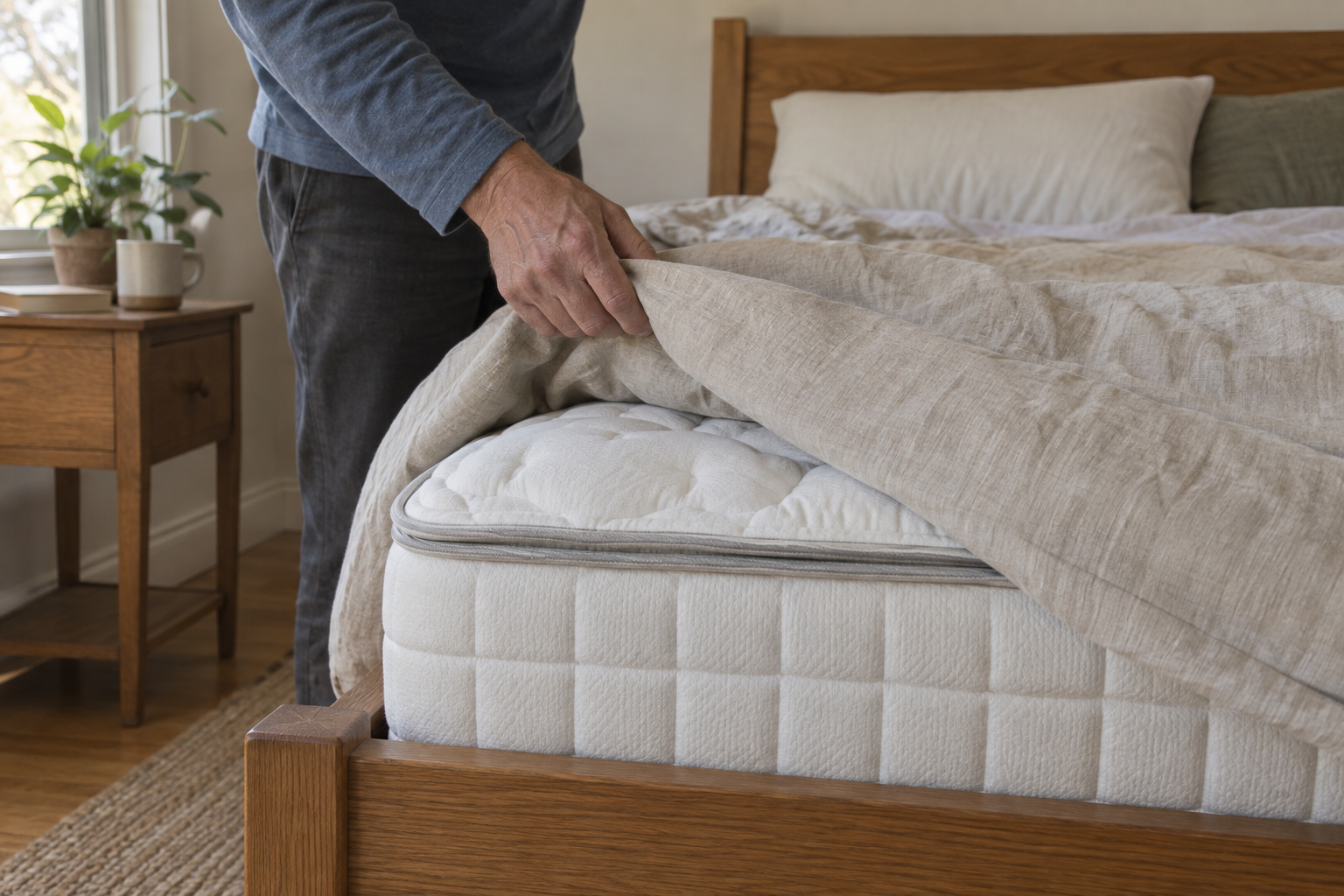
If you already have a spine diagnosis or instructions after a procedure, those individual instructions take priority over a mattress article. Avoid using a firmness label to change a care plan or assuming that everyone with the same diagnosis needs the same bed.
It can help to keep a short note of what you experience: whether discomfort occurs while lying down, when getting up or at other times, and whether you notice it on more than one bed. This is information you can describe during an appointment, not a method of diagnosing yourself.
Long Island Spine Specialists’ interventional pain management services describe part of the practice’s non-surgical spine care. Reading about the practice’s services can help you understand its scope without assuming that a particular service or procedure is right for you.
Spine support questions on Long Island
If you do not have a diagnosed spine condition, focus on a mattress that feels comfortable and supports you in your usual sleeping position. If you already have a diagnosed condition, follow the care plan your doctor has given you, including any guidance about sleep. A firmness label cannot determine which mattress is right for your spine. Persistent symptoms deserve a clinical discussion rather than another product guess.
Long Island Spine Specialists has offices across Long Island, including Commack, Bay Shore, West Hempstead, Riverhead and Melville. The practice provides surgical and non-surgical spine care. If your symptoms continue, you can contact the office nearest you to arrange an evaluation.